
It’s been one of those weeks where everything seems to be happening at once. Rates, regulation, geopolitics… even fuel prices are having a moment (I’ll get to that). Let’s start with property.
It’s been one of those weeks where everything seems to be happening at once. Rates, regulation, geopolitics… even fuel prices are having a moment (I’ll get to that). Let’s start with property.
The rules are changing (again)
From July this year, agents will be required to verify clients, assess risk, keep records, and report suspicious activity to AUSTRAC.
On paper – completely reasonable. In practice… I’m not convinced.
I feel it raises a fair question – if significant financial crime is slipping through the system, why is more of that responsibility now being pushed onto agents? We’re involved in the transaction, but we’re not the ones moving the funds. There’s a balance here between sensible oversight and shifting accountability, and it feels like that line is getting a little blurred.
That said, this is coming regardless – and like most regulatory changes, it will quickly become part of the landscape. The agents who approach it professionally won’t have an issue.
The rules are
changing (again)
From July this year, agents will be required to verify clients, assess risk, keep records, and report suspicious activity to AUSTRAC.
On paper – completely reasonable. In practice… I’m not convinced.
I feel it raises a fair question – if significant financial crime is slipping through the system, why is more of that responsibility now being pushed onto agents? We’re involved in the transaction, but we’re not the ones moving the funds. There’s a balance here between sensible oversight and shifting accountability, and it feels like that line is getting a little blurred.
That said, this is coming regardless – and like most regulatory changes, it will quickly become part of the landscape. The agents who approach it professionally won’t have an issue.
No More “Contact Agent”
Penalties are also being ramped up significantly – with fines up to $110,000 (or 3x commission) for misleading price estimates, and stricter rules around quoting below rejected offers or auction bids.
In simple terms – fewer “Contact Agent” campaigns, more transparency.
For buyers, particularly first home buyers, this is a genuine improvement. It removes a layer of guesswork and gives people a clearer entry point into the process.
What I don’t fully understand is the level of pushback from parts of the industry. Buyers are already forming a view on value within minutes – this just brings the advertised position closer to that reality.
No More “Contact Agent”
Penalties are also being ramped up significantly – with fines up to $110,000 (or 3x commission) for misleading price estimates, and stricter rules around quoting below rejected offers or auction bids.
In simple terms – fewer “Contact Agent” campaigns, more transparency.
For buyers, particularly first home buyers, this is a genuine improvement. It removes a layer of guesswork and gives people a clearer entry point into the process.
What I don’t fully understand is the level of pushback from parts of the industry. Buyers are already forming a view on value within minutes – this just brings the advertised position closer to that reality.
Zooming Out
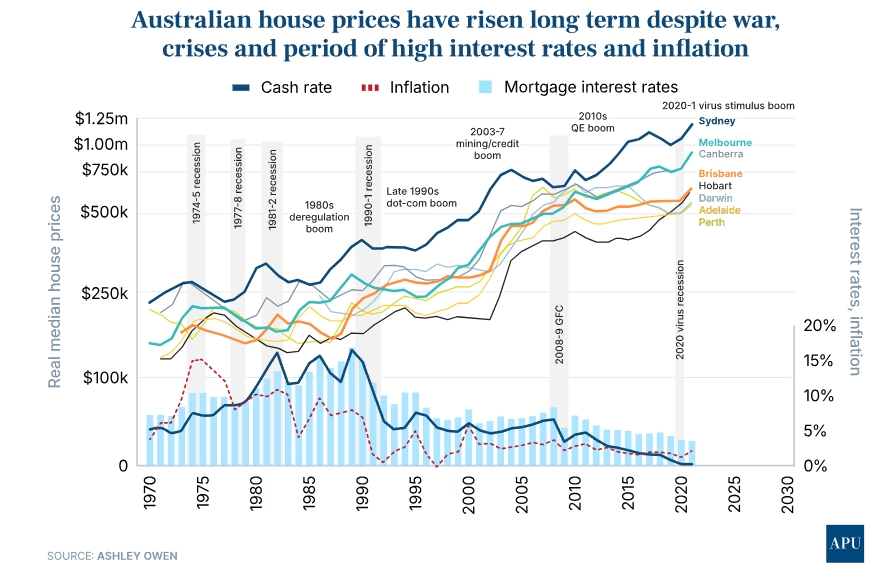
Ongoing tension in the Middle East, uncertainty around the US, energy markets moving – all of it feeds into sentiment, which plays a bigger role in property than most people realise.
In times like this, the market becomes more selective. Some buyers are cautious and others lean in, particularly toward assets they see as stable/safe. What tends to fall away is ill-advised optimism – where buyer/seller expectations don’t quite match reality.
Zooming Out
Ongoing tension in the Middle East, uncertainty around the US, energy markets moving – all of it feeds into sentiment, which plays a bigger role in property than most people realise.
In times like this, the market becomes more selective. Some buyers are cautious and others lean in, particularly toward assets they see as stable/safe. What tends to fall away is ill-advised optimism – where buyer/seller expectations don’t quite match reality.
Two very different – but equally special – wins.


My major acquisition this month was a penthouse in Barangaroo – that’s less about the spec sheet and more about how it feels to be there – elevated, quiet and luxurious. A rare find in one of Sydney’s newest, and most fought over suburbs.
Followed up by Cammeray – a completely different story of a beautiful family home with real warmth to it. Period charm at the front, a proper modern extension at the back, and a backyard that actually gets used. The kind of home that just makes sense for a family from the moment you walk through it.
Not my space – but hard to ignore
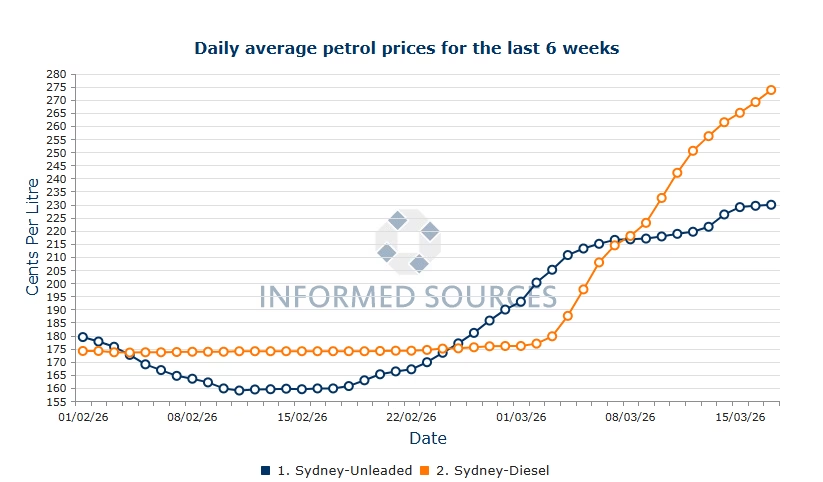
There’s a common view that petrol prices in Australia are high purely because of global oil prices – that’s actually not quite right. At roughly $2 per litre, the actual fuel component is closer to ~80-85 cents.
Margins account for around 50 cents, and the rest – about 68 cents per litre – is tax.
That tax is made up of fuel excise (~48c per litre) plus 10% GST… which is effectively a tax on top of the excise.
So every time you fill up a 60L tank, you’re paying roughly $30-$40 in tax alone.
Extend that out:
- ~15,000km per year = roughly $800+ in fuel tax annually
- Over 40 years = $30,000+, and closer to $50-60k when you factor in inflation
Not my space – but hard to ignore
There’s a common view that petrol prices in Australia are high purely because of global oil prices – that’s actually not quite right. At roughly $2 per litre, the actual fuel component is closer to ~80-85 cents.
Margins account for around 50 cents, and the rest – about 68 cents per litre – is tax.
That tax is made up of fuel excise (~48c per litre) plus 10% GST… which is effectively a tax on top of the excise.
So every time you fill up a 60L tank, you’re paying roughly $30-$40 in tax alone.
Extend that out:
- ~15,000km per year = roughly $800+ in fuel tax annually
- Over 40 years = $30,000+, and closer to $50-60k when you factor in inflation
What’s interesting is fuel excise was originally intended to fund roads.
Then you consider rego, tolls, and council rates, you could argue we’re already contributing to the same infrastructure multiple times over.
For context:
- US fuel tax sits around ~12c per litre
- Canada around ~15c per litre
- Australia… ~68c per litre all in
Not necessarily making a point – but it does change how you look at the bowser next time you fill up.
What’s interesting is fuel excise was originally intended to fund roads.
Then you consider rego, tolls, and council rates, you could argue we’re already contributing to the same infrastructure multiple times over.
For context:
- US fuel tax sits around ~12c per litre
- Canada around ~15c per litre
- Australia… ~68c per litre all in
Not necessarily making a point – but it does change how you look at the bowser next time you fill up.
As always – if any of this raises questions, feel free to reach out.
I’ll keep you across anything worth knowing as it develops.
– Jeremy
